

You ever just stop and… listen? I mean really listen. There’s a hum. A constant, low-level hum that you feel more than hear. The fridge, the power lines, the countless devices on standby. It’s the sound of the 21st century. Now, imagine it cuts out. Not for a few hours. Forever.
That’s the thing nobody gets. Our entire way of life isn’t built on concrete or steel. It’s built on a single, fragile assumption: that the electrons will never stop flowing. We plugged our entire civilization into the wall and never once considered the outlet might fail.
Turns out, it can. I read this wild article a while back on BBC Future about these things called “Miyake Events.” Basically, the sun occasionally has these epic tantrums, shooting out solar storms so powerful they leave scars in tree rings from a thousand years ago. The scientists in the article were clear: this isn’t a one-off. It’s a cycle. It’s happened before, and it will absolutely happen again. We were lucky in 2012. One massive storm missed us by a week. A week. That’s all that stood between us and this.
Based on my research, I can only speculate about what would have happened if the solar storm had hit us.
The First Few Days: The Weird Quiet
At first, it was almost nice. No traffic noise. You could see the stars like you were out in the wilderness. It felt like a camping trip. We lit candles, had cookouts with food from the defrosting freezer. There was a weird sense of community. “The power’ll be back on soon,” everyone said.
But then you tried to call someone. Nothing. No bars. Nada. I found an old crank radio in my emergency kit. Static. On every. Single. Station. That’s when the first cold trickle of fear dripped down my spine. This wasn’t local.
Later, I learned why. A NASA project called RHESSI figured out that a big solar flare doesn’t just kill the lights; it slams into our atmosphere and shreds the layer that makes radios work. It doesn’t just turn off the power; it unplins the entire global communication system in one go.
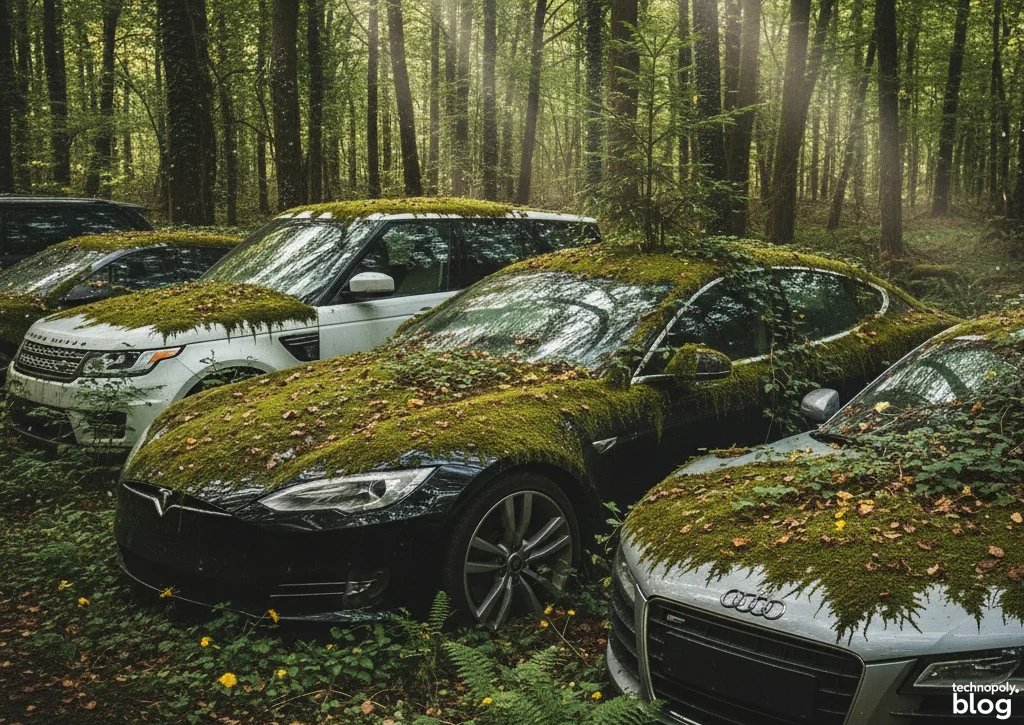
Cars were just… dead. Anything with a computer chip in it became a fancy paperweight. The roads were frozen rivers of metal. The silence wasn’t peaceful anymore. It was heavy. Oppressive.
The First Week: The Thirst is Real
This is when things got real. The water stopped. I mean, you’d turn the knob and nothing would happen. We’re so dumb. We think water comes from the tap. It doesn’t. It comes from massive plants that use a insane amount of electricity to clean it and pumps that use even more to push it to your house. No power? No water. It’s that simple.
You get thirsty fast. You get desperate faster. The bottled water was gone after the first real fight at the supermarket. Then people started breaking open fire hydrants, drinking from gutters. The sickness came next. Without water, you can’t flush a toilet. The smell of a city with two million people and no working sewers… God, you can’t imagine it.
The hospitals… man, the hospitals. Their generators chugged along for a few days. Then they ran out of gas. The machines stopped beeping. The lights in the ICU went dark. I remember skimming some medical journal once, the Journal of Disaster Medicine and Public Health Preparedness, talking about this. They called it “battlefield triage.” It sounded so clinical on the page. In real life, it was just hell.
Week Two and Three: The Great Walk
The food ran out. The hunger… it does something to you. It strips away everything civilized. The guy who used to be your nice neighbor is now the guy smashing a window to get the last can of beans
Then the walking started. Just a trickle at first, then a flood. A river of desperate, hungry people just… leaving. Where were they going? Who knows. Anywhere but here. The cities became tombs. I looked out my window at that river of people and remembered a CBC News headline I’d seen: “Is Canada ready for a catastrophic solar storm?” Standing there, watching our society dissolve, I had my answer. It was a sick joke.
The Unthinkable Problem: The Power Plants
And then it hits you. The oh-God-no thought.
The nuclear plants.
They don’t just turn off. The core stays hot for months. It needs constant, powerful cooling. They have diesel generators for that. But those generators? They need fuel. And the fuel trucks? They aren’t coming. Not ever again.
The engineers there, they’re heroes. They’d stay as long as they could, fighting in the dark to keep the pumps running. But eventually, the fuel runs out. The batteries die. And then… silence.
The water boils away. The rods melt. It creates this radioactive lava called corium that eats through everything. We saw it at Fukushima. That was one plant. This would be every single one, all over the world, melting down one after the other. The radiation would be carried on the wind for centuries. The few of us who survived the hunger and violence would then have to survive the rain, the dust, the very air itself. It was the final, ultimate middle finger from the world we broke.
A Year Later: The New Old World
A year on, the world is quiet. Actually quiet.
We live in small groups now as far as possible from radiations. Your worth isn’t in your degree. It’s in whether you can fix a broken water pump, or tell a poisonous plant from an edible one, or deliver a baby without killing the mother.
We’re farmers now. Bad ones. We’re trying to remember how to do it without tractors or fertilizer. The grid isn’t coming back. I saw a report once from some EMP Commission—a bunch of serious guys in suits—that said it would take years to rebuild the grid, if we could even remember how. The factories that make the parts need… you guessed it… electricity.
We live in the ruins of a world we don’t understand anymore. We’re like ants crawling over the skeleton of a giant. The Independent and Universe Today got it right. We weren’t ready. We’re still not.
Sources & Further Reading
- BBC Future (2024):“Miyake events: The giant solar superstorms that could rock Earth”
- CBC News (2025):“Solar flares and geomagnetic storms: Is Canada ready?”
- NASA RHESSI (n.d.):“The Impact of Flares”
- U.S. Department of Homeland Security (DHS), National Risk Management Center: Internal assessments on systemic risk and grid vulnerability. (Publicly referenced in numerous reports and congressional briefings).
- Journal of Disaster Medicine and Public Health Preparedness (2015):“Health Care System Planning for and Response to a Prolonged and Wide-Area Power Outage”
- https://doi.org/10.1017/dmp.2015.36 (Typically accessed through academic databases)
- The Conversation (2024):“How solar storms play havoc with our lives”
- International Atomic Energy Agency (IAEA):“The Fukushima Daiichi Accident Report”
- Commission to Assess the Threat to the United States from Electromagnetic Pulse (EMP) Attack (2008):Executive Report
- The Independent (2025):“Devastating impact of a solar storm on Earth”
- Universe Today (2025):“Is the world ready for a catastrophic solar storm?”
Nice written. We’ll probably need to re-build the ancient water pipelines from the Romans. And recreate old times metallurgy for tools.