

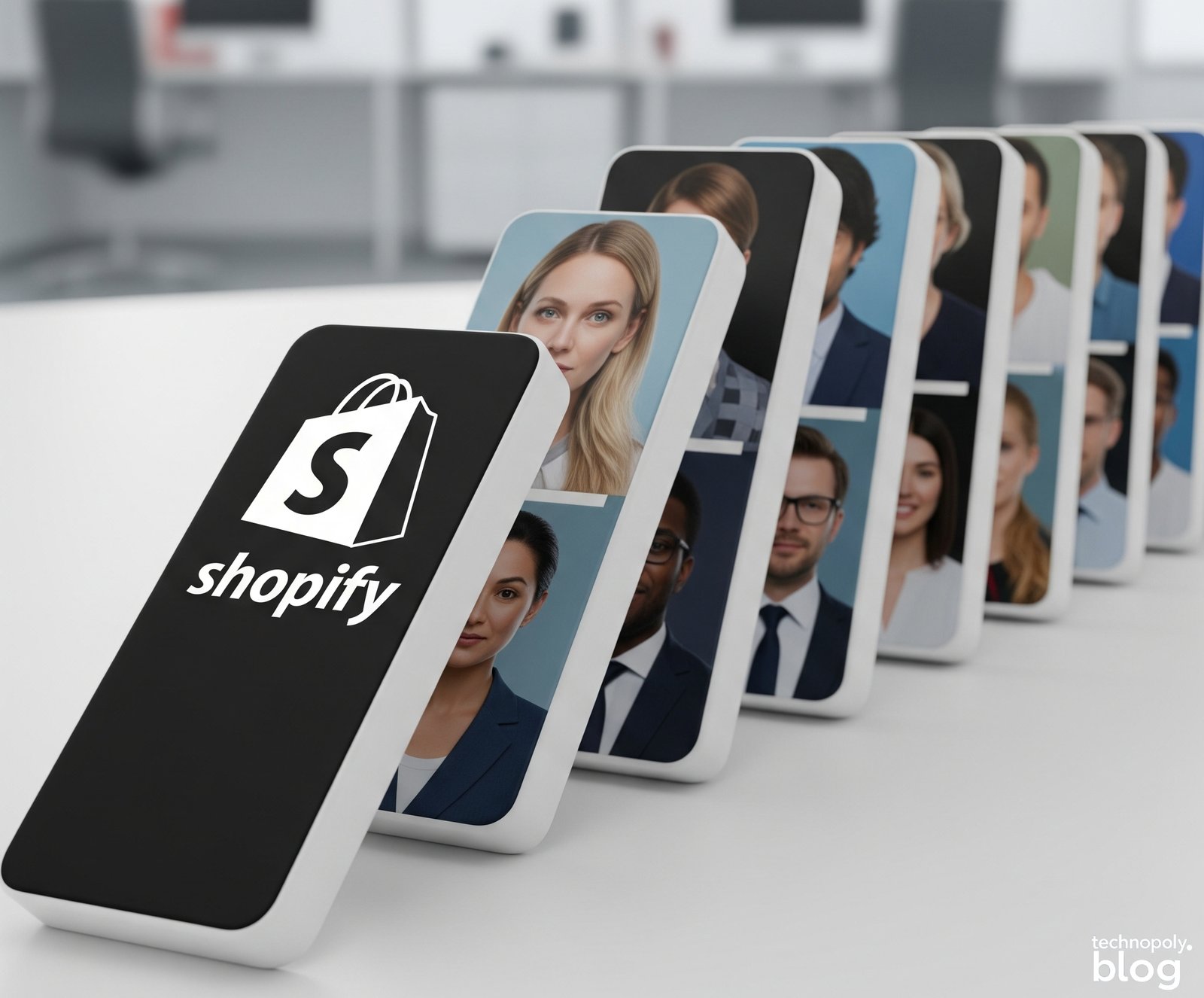
It seems the starting pistol for the corporate AI revolution has fired, and Shopify’s CEO Tobi Lütke did more than pull the trigger: he published the blueprint for the race
An internal memo from Lütke, shared preemptively to squash a leak, is one of the most candid and unsettling documents to come out of corporate America in the AI era. Forget vague pronouncements about “the future of work.”
This is a field manual. And for a lot of people, it reads like a warning shot.
Lütke’s language is startlingly blunt. He states that “Reflexive AI usage is now a baseline expectation.”
Let’s sit with that phrase for a second. Baseline expectation. It’s not a perk, a training opportunity, or a cool new tool. It’s a condition of employment.
His follow-up is even more stark: if you try to opt out, you’re choosing “stagnation,” which he calls “slow-motion failure.”
This isn’t corporate cheerleading; it’s a hardline ultimatum. Adapt or, quite clearly, perish.
But here’s the line that should make everyone, not just Shopify employees, stop and read it twice:
“Before asking for more Headcount and resources, teams must demonstrate why they cannot get what they want done using AI.”
Let’s be real. What does this actually mean in practice?
It means every new hire request now comes with an extra step: an AI feasibility study. You have to prove a machine can’t do the job before you’re allowed to hire a person.
The logical next step here is so obvious it’s almost painful: if we’re auditing new tasks for AI suitability, how long until we start auditing existing roles?
How long until a manager, under pressure to slash budgets, is asked to justify why an entire job function hasn’t been automated yet?
This shift isn’t about robots walking in and taking IDs. It’s a quiet, granular process. It’s death by a thousand cuts.
Take a role, any role, and break it down. Can an AI:
- Draft the initial code, email, or report?
- Crunch those numbers and spot the trend?
- Handle the first line of customer queries?
- Summarize that hour-long meeting in 30 seconds?
If the answer is “yes” to the core functions of a job, then that job is now on the clock.
The memo talks about AI as a “multiplier,” helping top performers become 10X or even 100X more effective. That sounds amazing until you realize: if one person can do the work of ten, what happens to the other nine?
Lütke rightly frames this as augmentation. He talks about AI as a “thought partner.” And for many, it will be.
But let’s not kid ourselves. For many others, it will be a replacement.
It’s augmentation until the company realizes the “augmented” employee doesn’t need a team around them anymore. It’s a “partner” that doesn’t take vacations, ask for a raise, or get sick.
So, what’s the takeaway?
The Shopify memo is a bellwether. It’s a raw look at how management thinking is crystalizing around AI.
It signals a world where your value isn’t just your output, but your ability to leverage AI to create that output. Your ability to prompt, to refine, to manage AI agents, becomes your new resume.
The central question for the workforce is shifting.
So, here’s a final thought, Tobi.
Let’s say every other CEO takes a page from your playbook.
First, they freeze hiring for anything an AI can touch.
Then, they start the quiet, internal audit of who’s already doing those same tasks.
What’s the endgame? What’s the number?
How many millions of people are we talking about globally who suddenly find their skills obsolete?
And this is where the circular logic becomes almost breathtaking.
The potential casualties of this AI efficiency drive are the core consumer base your entire ecosystem depends on.
So what’s the solution for them?
Of course. The solution is so simple it’s genius.
Become the entrepreneur. Maybe just open a Shopify store.
Problem solved.
Source:
https://x.com/tobi/status/1909251946235437514?lang=en